Polycystic ovary syndrome (PCOS), now known as polyendocrine metabolic ovarian syndrome
(PMOS) is the most common endocrinological disorder that affects women.¹
In 2026, PMOS is estimated to affect 5%-20% of the population, yet its underlying causes are not
entirely understood in mainstream medicine.¹ Many people living with PMOS may not realise they
have it, and some may be asymptomatic. So, how do you know if you have PMOS and what can
you do about it?
What is PMOS?
PMOS affects how your metabolism, ovaries and hormones function. With PMOS, the body
typically makes too many androgens, which are hormones that are present at higher levels in men.
PMOS is commonly associated with high insulin levels, elevated androgens (such as testosterone),
obesity and diabetes. Mental health conditions, including depression and anxiety, and having a
family history of PMOS are also common factors. 60%-70% of daughters born to mothers with
PMOS also develop the condition.¹
Common Signs and Symptoms include:
• Heavy, irregular or missed periods
• Excess hair on your sideburns area, upper lip, neck, nipples, chest, abdomen and thighs
(hirsutism)
• Acne and other skin problems
• Mood fluctuations, anxiety and depression
• Hair loss, thin hair or a receding hairline
• Weight gain and low energy
Symptoms can improve as hormone levels change with age, although acne and excess hair growth may still be prominent. PMOS can also be present in people with regular periods, lack of symptoms and even after menopause.² Mental health disorders (including depression and anxiety) and eating disorders are also common among people with PMOS.
Do you have PMOS?
The pathophysiology of PMOS is complex and multifactorial, making it difficult to pinpoint a
single cause.¹˒³ However, both genetic factors and environmental factors have been found to
contribute to its development. There is not yet global agreement on the diagnostic criteria for
PMOS.¹
The 2023 International Evidence-Based Guidelines for the Assessment and Management of PCOS recommends the Rotterdam criteria for diagnosing PMOS, requiring at least two of the following three characteristics:
(a) Ovulatory dysfunction (OD) – often presenting as irregular menstrual cycles;
(b) Clinical or biochemical hyperandrogenism (HA) – often presenting as hirsutism, acne or
alopecia; and
(c) Polycystic ovary morphology (PCOM) – usually identified via ultrasound, with other
hormonal disorders excluded. Having ovarian cysts is not a requirement for diagnosis; therefore, international agreement recently renamed the more commonly used PCOS to polyendocrine metabolic ovarian syndrome (PMOS).¹
Those with PMOS have an increased risk of:
• Menstrual cycle irregularities
• Infertility
• Metabolic dysfunction
• Insulin resistance
• Type 2 diabetes mellitus
• Dyslipidemia
• Hypertension
• Cardiovascular disease¹
Without appropriate treatment, PMOS can contribute to long-term health complications, including type 2 diabetes, high blood pressure and heart disease. It is important to seek help from your healthcare professionals if you suspect PMOS, including if you have been trying to conceive for over 12 months.²
Supporting PMOS Through Diet and Lifestyle
Diet and lifestyle have been shown to influence PMOS symptoms and overall health.
Prioritise:
• Staying physically active with regular movement,
• Reducing and managing stress,
• Maintaining good sleep hygiene,
• Eating a healthy, balanced, predominantly whole foods diet,
• Avoiding smoking, drinking, caffeine and refined foods high in carbohydrates,
• Natural therapies such as acupuncture and herbal medicine.²
There is emerging evidence that environmental toxins, including endocrine-disrupting chemicals, can interfere with hormone signalling and metabolic pathways.¹
Low-grade chronic inflammation also plays a role in the long-term metabolic consequences of PMOS.¹ Recent studies also highlight the relationship between gut health and endocrine function, with alterations in gut microbiota (dysbiosis), being linked to PMOS.¹
Conventional Treatment for PMOS
Treatment for PMOS is highly individualised, as the presentation of this condition varies
considerably between people. There is no single treatment or medication that addresses every aspect
of PMOS.
Conventional medical management may include hormonal contraceptives, anti-androgen
medications, or insulin-related medications. Lifestyle interventions, including balanced nutrition,
exercise and behavioural changes, are also recommended as part of PMOS management.¹Ideally, PMOS management should extend beyond simply supporting symptoms. Ongoing
monitoring and preventative care are important for supporting long-term holistic health and overall
wellbeing. ¹
Acupuncture for PMOS
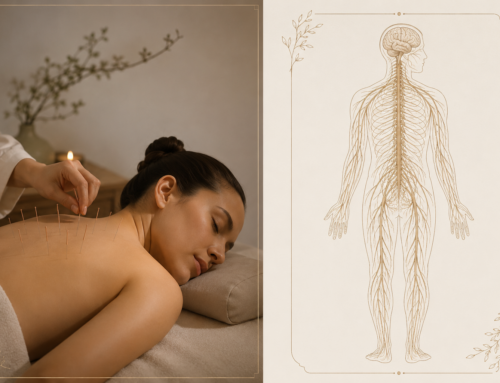
Acupuncture has widely been used to support people with PMOS and its associated symptoms.
Acupuncture, a traditional Chinese medical practice, uses very fine acupuncture needles to stimulate
specific points on the body to modulate physiological processes.⁸ From a Chinese medicine
perspective, acupuncture may alleviate PMOS symptoms by regulating qi (a concept similar to
energy or life force) and blood circulation, supporting metabolic function and helping to rebalance
the neuroendocrine system.⁹
A 2026 systematic review and network meta-analysis by Li et al. (2026) compared the effects of
different acupuncture methods on PCOS/PMOS, examining hyperandrogenism,
metabolic status, sexual hormone disturbance, and infertility. The review included 59 studies
involving 5937 participants. Findings suggest that acupuncture may benefit several aspects of
PMOS.⁴
Potential hormonal, metabolic health, reproductive and fertility benefits include:
• Reducing testosterone levels – important in managing elevated androgens,⁴
• Improving hormone markers (LH and FSH),⁴
• Improving metabolic markers – body mass index (BMI), triglyceride and cholesterol levels, low-
density lipoprotein (LDL) and fasting blood glucose,⁴
• Supporting fertility: potential benefits in improving pregnancy rates among women with PMOS,⁴
• Increasing blood flow to the ovaries, reducing ovarian volume and number of ovarian cysts,⁵
• Reducing cortisol levels – important in reducing inflammation,⁵
• Improvements in hirsutism, acne, menstrual irregularities and emotional wellbeing.⁶
Acupuncture is a safe, effective, complementary approach to individualised PMOS management.⁴’⁵’⁷
Acupuncture has gained increasing attention in recent clinical research due to its favourable safety
profile and minimal adverse effects, making it a popular alternative medical management to
pharmacological interventions for PMOS.⁶
A literature review on acupuncture effectiveness in PMOS found that higher treatment success rates were associated with:
1. A higher number of acupuncture treatment sessions.
2. Regular intervals between acupuncture treatments (i.e. consistency in treatment frequency).
3. Positive dietary and lifestyle changes.³
Managing PMOS is multifactorial and requires consistency, time, and effort. If you are ready to take a more proactive approach to your health, we are here to support you. At Haynes Acupuncture and Coastal Natural Therapies, we support clients experiencing symptoms of PCOS/PMOS through individualised acupuncture treatments grounded in Chinese medicine. Our practitioners look forward to supporting you on your health journey with an individualised treatment plan.
Book your appointment with us or in our Bundall Acupuncture Clinic now on (07) 5531 6461 or email us at info@haynesacupuncture.com.au
By Eryn Heddle
References
¹ Chan, J. L., Masini, I., & Pisarska, M. D. (2026). Polyendocrine metabolic ovarian syndrome
(PMOS)/polycystic ovary syndrome (PCOS): Current and future trends. Journal of Clinical
Investigation, 136(12). https://doi.org/10.1172/jci202824
² Queensland Government. (2016). Polyendocrine metabolic ovarian syndrome (PMOS). https://
www.qld.gov.au/health/staying-healthy/women-and-girls-health/period-health/polyendocrine-
metabolic-ovary-syndrome-pmos
³ de Oliveira, N. M., Machado, J., Lopes, L., & Criado, M. B. (2023). A review on acupuncture
efficiency in human polycystic ovary/ovarian syndrome. Journal of Pharmacopuncture, 26(2), 105–
123. https://doi.org/10.3831/KPI.2023.26.2.105
⁴ Li, P., Lu, Y., Wang, Y., Weng, A., & Liang, X. (2026). Effects of different acupuncture methods
on polycystic ovarian syndrome: A systematic review and network meta-analysis. BMC
Complementary Medicine and Therapies, 26(1), 104. https://doi.org/10.1186/s12906-026-05295-5
⁵ Lim, C. E. D., & Wong, W. S. F. (2010). Current evidence of acupuncture on polycystic ovarian
syndrome. Gynecological Endocrinology: The Official Journal of the International Society of
Gynecological Endocrinology, 26(6), 473–478. https://doi.org/10.3109/09513591003686304
⁶ Liu, Y.-X., Han, Y.-H., Jiang, Y., Zhang, J., & Zhang, Y.-H. (2025). Experimental analysis of
acupuncture’s effects on hyperandrogenemia and related symptoms in PCOS patients. Frontiers in
Medicine, 12. https://doi.org/10.3389/fmed.2025.1531506
⁷ Nurwati, I., Tristan, C. D., Modesty, K., Kynaya, E. M., Hanif, I., Sudiono, N. E., & Ilyas, M. F.
(2025). Safety of acupuncture in polycystic ovary syndrome: A systematic review and meta-analysis
of randomised controlled trials. Medical Acupuncture, 37(4), 281–291. https://doi.org/
10.1177/19336586251360119
⁸ Kaptchuk, T. J. (2002). Acupuncture: Theory, efficacy, and practice. Annals of Internal Medicine,
136(5), 374–383. https://doi.org/10.7326/0003-4819-136-5-200203050-00010
⁹ Chen, X., He, H., Long, B., Wei, B., Yang, P., Huang, X., Wang, Q., Lin, J., & Tang, H. (2023).
Acupuncture regulates the apoptosis of ovarian granulosa cells in polycystic ovarian syndrome-
related abnormal follicular development through LncMEG3-mediated inhibition of miR-21-3p.
Biological Research, 56, 31. https://doi.org/10.1186/s40659-023-00441-6
¹⁰ Azziz, R., Carmina, E., Chen, Z., Dunaif, A., Laven, J. S. E., Legro, R. S., Lizneva, D.,
Natterson-Horowtiz, B., Teede, H. J., & Yildiz, B. O. (2016). Polycystic ovary syndrome. Nature
Reviews Disease Primers, 2(1). https://doi.org/10.1038/nrdp.2016.57